

如何使用try-with-resource对io流进行关闭
创始人
2024-12-27 22:02:07
0次
传统写法操作io流
例如如下读取的文件的io流,我们之前可能会这样写
public class Main {
 public static void main(String[] args) {
  FileInputStream fileInputStream =null;
  try {
   fileInputStream = new FileInputStream(new File("/Users/laoniu/a.txt")); //打开流
   byte[] bytes = new byte[1024];
   int line = 0;
   //读取数据
   while ((line = fileInputStream.read(bytes))!= -1){
    System.out.println(new String(bytes,0,line));
   }

  } catch (IOException e) {
   e.printStackTrace();
  }finally {
   if (fileInputStream != null){ //不为空
    try {
     fileInputStream.close(); //关闭流
    } catch (IOException e) {
     e.printStackTrace();
    }
   }
  }
 }
}
使用try-with-resource写法优雅操作io流
public class Main {
 public static void main(String[] args) {
  //把打开流的操作都放入try()块里
  try( FileInputStream fileInputStream = new FileInputStream(new File("/Users/laoniu/a.txt"))) {
   byte[] bytes = new byte[1024];
   int line = 0;
   while ((line = fileInputStream.read(bytes))!= -1){
    System.out.println(new String(bytes,0,line));
   }

  } catch (IOException e) {
   e.printStackTrace();
  }
 }
}
在try()中可以编写多个文件io流或网络io流。让我们看看java编译器是怎么帮我们实现的
借助idea查看编译后的代码
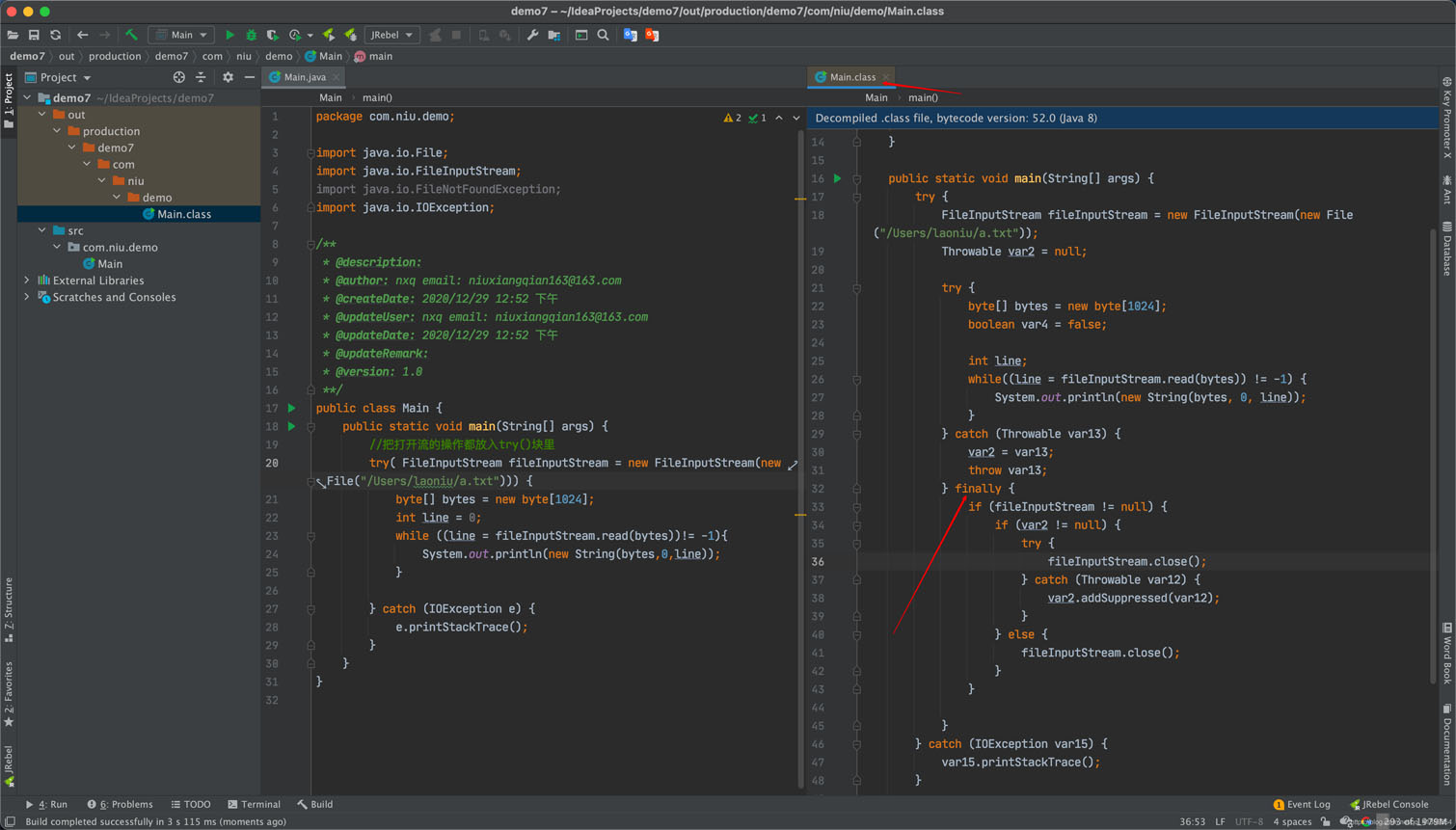
可以看到编译后的代码,java编译器自动替我们加上了关闭流的操作。所以跟我们自己关闭流是一样的。try-with-resource这样优雅的写法还是不错的,让代码看起来不那么臃肿。
注意jdk1.7以后才可以用
相关内容
热门资讯
空调连续工作多久需要停机休息
空调连续工作的时间取决于多个因素,包括空调的型号、功率、使用环境和维护情况等。一般来说,空调可以连续...
空调哪个符号是除湿的
空调除湿功能通常用一个水滴形状的符号表示。不同品牌和型号的空调遥控器可能会有所差异,但一般来说,除湿...
格力空调多长时间加一次氟利昂
1、一般情况下,空调对氟利昂的使用量是非常小的,所以在空调使用了四年左右的时候再考虑加也没问题。2、...
空调用多长时间需要加氟一次
一般情况下是五年。当出现以下这几种情况时,空调才需要加氟。1、空调的室内机和室外机各有两个接口,当接...
格调生活·C标思享荟:卡萨帝在...
9月12日的郑州龙湖金融岛,夜风轻拂,灯光璀璨。“C标时刻共传奇——卡萨帝思享荟暨20周年品牌盛典郑...
品牌价值破千亿、高端份额持续领...
9月12日,“C标时刻共传奇——卡萨帝思享荟暨20周年品牌盛典郑州站”在郑州龙湖金融岛举办。2026...
空调主板坏了修800还是换新的
空调主板坏了是修还是换新,需要考虑多个因素,以下是一些建议:1. 维修成本:如果维修费用较低,比如 ...
空调开多久需要休息多长时间
问题:空调开多久需要休息多长时间回答:1、在使用空调的过程中,一般空调开7~8个小时左右需要休息2~...
中央空调多长时间清洗一次
1、一般空调开机前清洗一次即可,空调开机中间时段再清洗一次,空调关机时清洗一次,这样比较合理。2、空...
中央空调氟利昂多久加一次
看空调制热和制冷程度,很多人的观点认为氟利昂必须一年放一次,其实这个观点是错误的,理解上面有点偏差,...